

I rarely take a weekday off.
This past Wednesday was my birthday and I had a long list of personal errands that had been piling up — so I took the day. In between stops I decided to swing by my nonna’s house.
She’s 94 years old. Still lives alone in the house she and my nonno built over sixty years ago.
I usually visit in the evenings or on weekends. Showing up in the middle of a Wednesday was new.
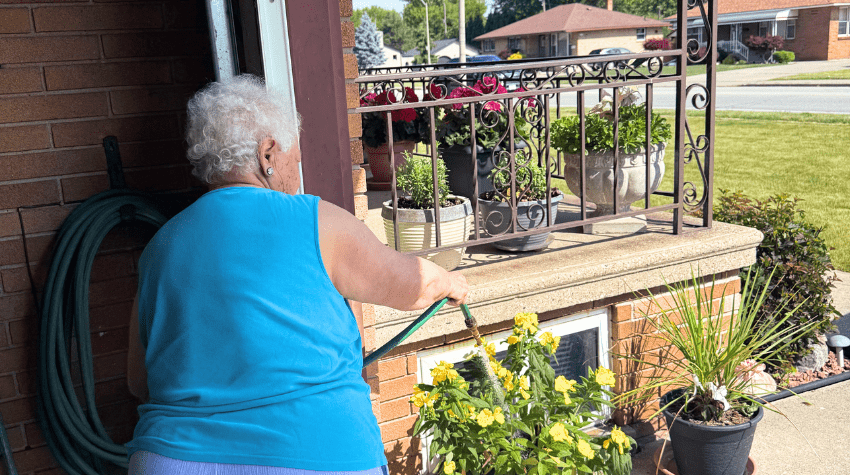
I pulled up and there she was. Outside. Watering her flowers and cleaning out her garage.
Something about that just hit me.
Every time one of her kids or grandkids comes over we try to help, try to take things off her plate. And she lets us. But showing up unannounced on a Wednesday morning made it clear — there is still a tremendous amount this woman does herself, every single day, without anyone asking her to.
She works her tail off. After all these years. And she wouldn’t have it any other way.
It keeps her going strong.
I’ve been thinking about that image all week — and about what it actually means to show up and do the work.
People assume commercial financing is about finding the best rate. And rate matters. But it’s rarely the hard part.
Not long ago I took a meeting with the seller in a share purchase transaction. My client — the buyer — needed the seller to understand how his vendor takeback was structured within the overall financing arrangement. How it fit, why it was set up the way it was, and what it meant for him going forward.
A vendor takeback — or VTB — is when the seller agrees to finance a portion of the purchase price themselves. Instead of receiving the full amount at closing, they take back a note from the buyer and get paid out over time. It’s a tool that can make deals work when conventional financing alone doesn’t cover the full picture. But it also means the seller is carrying risk — and they need to understand exactly where they sit within the overall structure before they agree to it.
That’s why I took the meeting. Not because it was a formal part of my role. Because it needed to happen for the deal to close, and nobody else was going to do it.
Here’s the broader lesson — and it applies well beyond commercial financing.
In any complex transaction, the rate or the price is rarely what determines the outcome. What determines the outcome is whether someone understands every moving part well enough to hold it all together when things get complicated.
Lawyers, appraisers, lenders, accountants, sellers — everyone has their own timeline, their own concerns, their own language. Most of the time they aren’t talking to each other. They’re each doing their piece and assuming someone else is managing the whole picture.
Often nobody is.
The most valuable person in any complicated deal isn’t the one with the sharpest pencil on rate. It’s the one who understands the full picture and makes sure nothing falls through the gaps.
That’s true whether you’re financing a greenhouse acquisition, buying a business, or navigating any transaction with more than two moving parts.
Until next week,
Vince
P.S. She tried to feed me before I could get back in the car. Some routines never change either.