

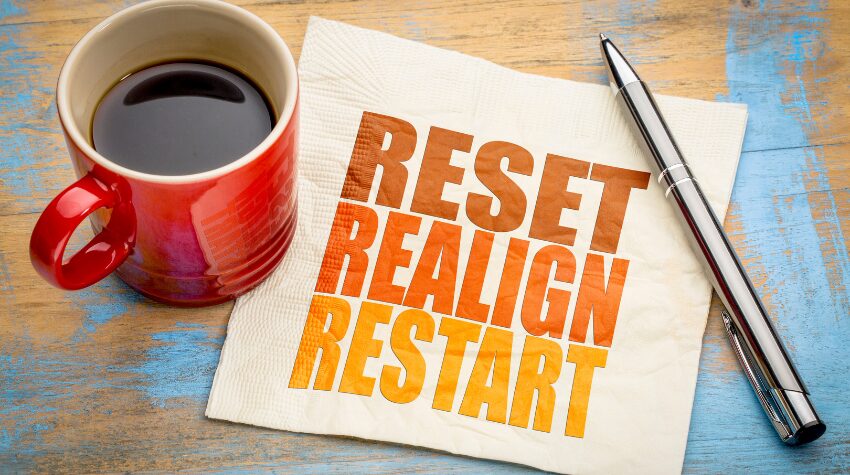
I’ve always thought that Mondays carry an expectation that doesn’t really belong to them.
They’re asked to set the pace, demand perfection, bring order, and push us back onto the “right track” after rest.
January does exactly the same thing, but on a much larger scale.
January arrives with a very heavy expectation, at least for my taste: the idea that something has to change now. The calendar moves forward, the year resets, and with that comes the pressure to prove that this time—this year—things will truly be different.
But January doesn’t work like a reset button.
Because for me, life—at least when it comes to the things that really matter, like habits, financial decisions, or sustainable change—doesn’t work like a sprint. It works like a marathon. And in a marathon, energy and strategy are distributed along the way, not burned in the first kilometer.
That’s why what January asks for is not speed. It asks for order.
The “start strong” trap
We come out of December, a month that blends spending, emotions, social commitments, and mental exhaustion. It’s no coincidence that many people arrive in January with a vague sense of guilt: for having spent too much, for letting routines slide, for postponing decisions.
The automatic response is usually to compensate.
Rigid budgets, ambitious financial goals, quick decisions that promise immediate control.
The problem isn’t wanting to improve. The problem is wanting to do it without looking at what’s already in play.
When we try to “start strong” without understanding our point of departure, what we build isn’t discipline—it’s early burnout. And that explains why so many good intentions fade before February is over.
Organizing is not stagnating
There’s a very common confusion between moving forward and moving fast.
Organizing is often perceived as an uncomfortable pause, almost like a step backward. Yet when it comes to finances, organizing is one of the most active things you can do.
Organizing means looking at:
- which commitments are still in place
- which decisions were made out of inertia
- which expenses no longer reflect what you want to sustain
Not to judge the past, but to understand the present.
Nothing gets fixed in a lasting way without first being understood. And January—with its slower pace and lack of real urgency—is the most honest time to do that.
January is a month for diagnosis, not pressure
Before thinking about big changes, January invites something far more grounded: seeing the full map.
Not to solve everything, but to know where you’re standing.
That means asking uncomfortable but necessary questions:
- Which parts of your financial structure no longer fit your current life?
- Which commitments are still there simply because “they’ve always been”?
- Which decisions are being postponed out of exhaustion, not strategy?
These questions aren’t looking for immediate answers. They’re looking for clarity.
And clarity, even when it doesn’t feel like immediate progress, is the foundation of any decision that won’t fall apart later.
Not all decisions need to be made in January
Another misleading expectation of this month is the urgency to resolve everything.
As if waiting were the same as failing.
In reality, many important decisions get worse when they’re made under pressure: refinancing without analyzing scenarios, taking on new obligations just to relieve anxiety, committing to changes that haven’t been thought through calmly.
January doesn’t demand definitive solutions. It demands judgment.
Waiting isn’t always postponing. Sometimes it’s the smartest way to protect yourself.
Order as a real starting point
Organizing doesn’t mean having all the answers. It means knowing which questions matter.
A well-used January isn’t the one that produces spectacular changes, but the one that leaves a clearer structure behind: less noise, less guilt, more awareness of what works and what doesn’t.
Not to start from zero. But to keep going from a more honest place.
January doesn’t ask you to be someone else
It doesn’t ask you to reinvent yourself.
It doesn’t ask for immediate results.
It doesn’t ask you to prove anything.
It asks something simpler—and harder at the same time: to look at what already exists without punishing yourself for it.
Because when order comes first, the decisions that follow tend to be better. And many times, that is the true beginning of the year.