

One of my favourite Canadian finance and economics podcasts is The Loonie Hour.
If you haven’t listened, I’d recommend it. Richard Dias — Rich — is one of the hosts. He’s a CFA and Global Strategist at IceCap Asset Management. Sharp, opinionated, and not shy about saying exactly what he thinks about the Canadian economy.
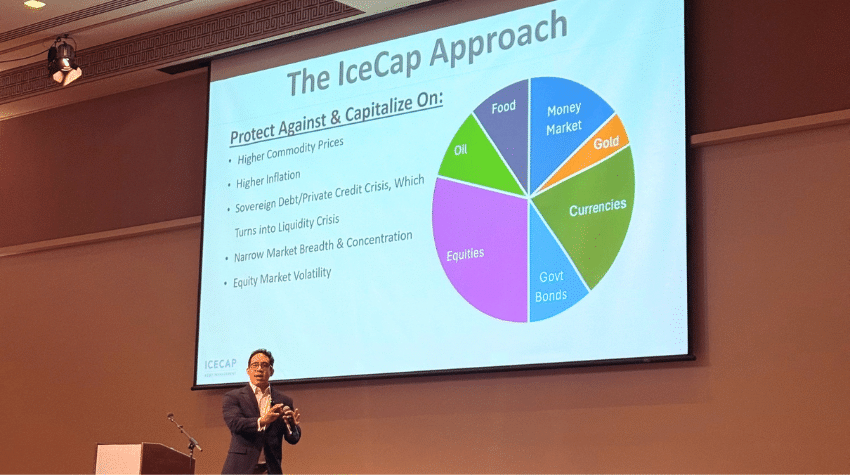
This past week Rich was in Windsor for a presentation at the Century 21 Windsor-Essex Economic Summit. Big shout out to Cody Kraus and the Century 21 team for putting together a genuinely great event.
The night before, I had the good fortune of joining Rich and a small group for dinner. But first — we took him on a little detour.
A greenhouse tour. Pepper and tomato operation right here in Essex County.
Now, Rich spends his days analyzing macro risk. Global bond markets. Currency crises. Commodity cycles. Energy shocks. He has a view on pretty much everything happening in the Canadian and global economy.
He had no idea what was growing in our backyard.
He couldn’t believe how high the plants grew. How much fruit a single plant could generate. The scale of the operation. The technology. The sheer output of what’s sitting right here in Leamington-Kingsville.
But what really stopped him was the capital required to build one of these operations.
Rich kept coming back to it all evening. CAPEX — capital expenditure — is what drives the Canadian economy. It’s what creates jobs, builds industries, and generates the kind of real economic output that actually moves the needle. And here in Essex County, greenhouse operators are deploying serious capital every time they expand, retrofit, or build a new range.
For a guy who makes his living understanding Canadian economic risk and opportunity — genuinely no clue.
And he was genuinely blown away.
That moment stuck with me through dinner and into the next day.
Rich’s presentation covered a lot of ground — global debt cycles, energy crises, inflation, the structural challenges facing the Canadian economy. Heavy stuff, and all of it worth paying attention to. The candid version at dinner was even more direct.
But what I keep coming back to is the greenhouse moment.
Here’s a man who follows the Canadian economy more closely than almost anyone. And the single largest greenhouse growing region in Canada — sitting an hour from Windsor — was essentially invisible to him until we drove him through it.
That’s not a knock on Rich. That’s just the reality of how Canada gets talked about nationally. We hear about oil sands, housing markets, Bay Street, the auto sector. We don’t hear nearly enough about the billions of dollars of agricultural output being produced in Essex County every single year. About the families who have built generational operations here. About the sophistication of what’s actually happening inside those greenhouses.
Rich left that tour differently than he arrived.
And here’s the thing about that — it applies to more than just greenhouses.
There are opportunities hiding in plain sight in this region that don’t make the national conversation. Things that people who live here drive past every day without fully appreciating what they represent. The investors, operators, and advisors who understand this region at the ground level have always had an edge that no podcast, no presentation deck, and no Bay Street analyst can replicate.
That’s what local knowledge actually looks like.
Rich flew in and we showed him something he didn’t know existed.
Some of us have been living next to it our whole lives.
Until next week,
Vince
P.S. Rich is exactly the same in person as he is on the podcast. Which is to say — very direct, very smart, and very willing to tell you what he actually thinks. Highly recommend The Loonie Hour if you want an unfiltered take on where Canada is headed.