

I was in my early 30s and thought I had made it.
CPA. Corporate banker. Six figures. Fast track for advancement. I didn’t love the job, but I didn’t dislike it either. By every conventional measure, I was doing exactly what I was supposed to be doing.
Then one day, kind of by accident, everything changed.
It was my first time back at the gym in months. Sitting in the parking lot before going in, I realized I needed something to listen to. I did a quick search for free business audiobooks on YouTube. Rich Dad Poor Dad kept coming up. I’d heard of it but had no idea what it was about.
Two and a half hours later — after what was likely the longest workout of my life, which I wouldn’t recommend for your first session back in months — my life had changed forever.
In a matter of hours, I went from thinking I was on top of the world to feeling like a bit of a chump.
The book flipped my entire belief system about wealth and financial success upside down. I realized I had completely fallen into the trap — go to school, get good grades, get a good job, put your money in RRSPs, invest in mutual funds, live happily ever after.
My biggest takeaway: the rich don’t work for money. They work for assets.
I was working for money. And I had been doing it my whole life without questioning it.
That realization has shaped how I think about money ever since. And lately, it feels more relevant than it has in years.
Here’s something most people don’t think about — but once you see it, you can’t unsee it.
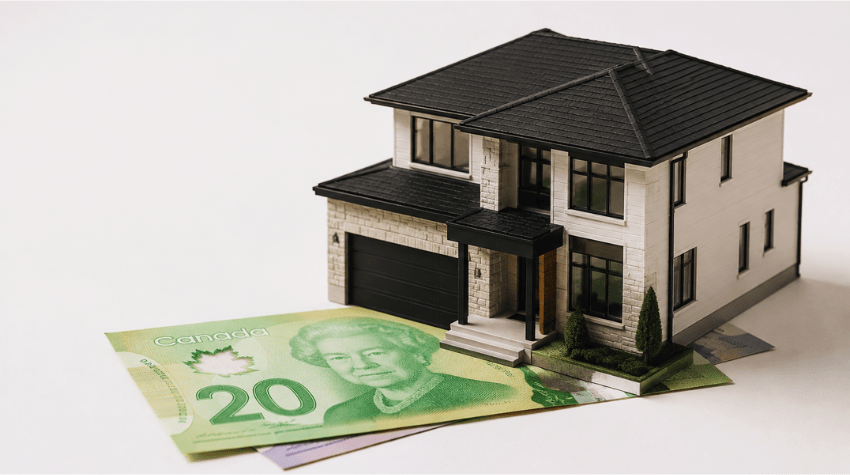
Your house has likely gone up significantly in value over the past decade. Maybe doubled. Maybe more. Most people look at that number and feel good about it.
But here’s the question worth asking: did your house go up — or did the dollar go down?
The number of people who genuinely needed or wanted your specific house didn’t double. What changed is the number of dollars in circulation. When governments print money, the purchasing power of each dollar quietly erodes. Your house didn’t become twice as valuable. It takes twice as many dollars to buy it.
The chocolate bar at the dollar store is another way to see it. It might cost the same as it did ten years ago — but I can assure you it got a lot smaller. Same price. Less chocolate. That’s devaluation in plain sight.
This is why so many people moved into real estate investing after 2012. It wasn’t just that real estate was a good investment — it was that people started to understand that real estate would benefit from the massive amount of money being printed. Owning a scarce, tangible asset was a way to stay ahead of a dollar that was quietly losing ground.
And it worked. For a long time.
For homeowners and real estate investors in Windsor-Essex, this raises practical questions about available equity, refinancing, debt restructuring and how to finance the next investment in a changing market.
At UCC Mortgage Co., we help homeowners and investors explore mortgage solutions involving residential properties, investment properties, refinancing, debt consolidation and private mortgage financing. The right option depends on the property, the borrower’s financial position and the overall objective.
Here’s where it gets more complicated.
The people I talk to who genuinely understand how money works — who have built real wealth and are thinking carefully about how to protect it — are more unsettled right now than I’ve seen them in years.
Not because they’re in trouble. But because the easy answers aren’t as easy anymore.
Real estate has cooled. The stock market feels uncertain. GICs barely move the needle in real terms. Savings accounts are a guaranteed slow loss when you account for inflation and devaluation. Every option has a catch right now.
And for people who have worked hard to accumulate something real — that uncertainty is genuinely frustrating.
The question I keep hearing, in different forms, is the same one:
Where do you put your money when nowhere feels obviously right?
I don’t have a perfect answer. But I’ve stopped pretending the conventional ones are good enough.
Until next week,
Vince
P.S. Rich Dad Poor Dad is still on my recommended list fifteen years later. If you’ve never read it — or listened to it in a gym parking lot — it’s worth your time.